Why Regular Solar Panel Cleaning Matters
The Impact of Dirt and Debris on Efficiency
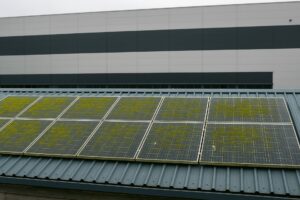
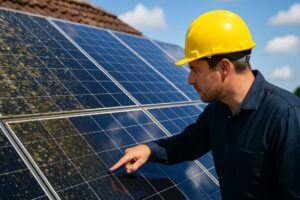
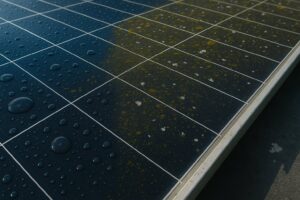
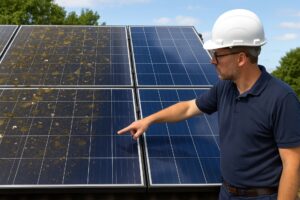
Solar panels rely on sunlight reaching the photovoltaic cells. Any contamination — from dust, pollen, or moss to bird droppings and air pollution — acts as a barrier that reduces energy absorption. Studies show that dirty panels can lose between 15–25% efficiency, particularly in high-dust or coastal environments.
When grime builds up, it can also cause hotspots — areas of overheating that permanently damage cells. Professional-grade cleaning solutions such as Chemitek solar chemicals are formulated to remove organic and inorganic residues without damaging the delicate surface coatings of modern solar panels.
Why Rain Alone Isn’t Enough
It’s a common misconception that rainfall cleans solar panels. In reality, rainwater contains dissolved minerals and pollution particles that leave streaks and deposits behind — much like a car windscreen after a downpour.
That’s why professionals use pure water cleaning systems such as RotaQLEEN and QLEEN equipment, which filter out minerals and deliver spotless, residue-free results. The rotating brush design ensures consistent, gentle cleaning pressure without abrasion.
How Often Should You Clean Solar Panels?
In most of the UK, solar panels should be cleaned at least once or twice per year, but some installations require more frequent maintenance. The ideal schedule depends on your environment, panel angle, and exposure to pollutants or organic matter.
Commercial and industrial sites — especially those near roads, factories, or farmland — typically require three to six cleans annually, while residential properties in cleaner suburban areas may only need one or two.
Cleaning Frequency by Environment – UK Conditions Table
| Environment Type |
Typical Contaminants |
Recommended Cleaning Frequency |
Suggested Equipment / Products |
| Coastal Areas |
Salt spray, seabird droppings |
Every 2–3 months |
RotaQLEEN + Chemitek DG1 |
| Urban Environments |
Pollution, soot, bird mess |
Every 4–6 months |
QLEEN poles + SR15 cleaner |
| Rural / Agricultural |
Dust, pollen, crop residue |
Every 3–4 months |
RotaQLEEN + Chemitek AGS |
| Industrial / Construction |
Cement dust, fine particles |
Every 1–2 months |
QLEEN Vario + DG1 degreaser |
| Residential (Low Soiling) |
Light dust, general debris |
Every 6–12 months |
QLEEN Classic + Pure water system |
| Solar Farms / Flat Arrays |
Dust buildup, low rainfall contact |
Every 2–3 months |
SolarCleano robot + Chemitek range |
Table: Recommended solar panel cleaning frequency by environment — Solar Clean Robotics UK.
Residential vs. Commercial Solar Panel Cleaning
Residential Cleaning Frequency
For most homeowners, a professional clean once or twice per year is sufficient. The best times are typically spring and autumn — before and after pollen season and heavy rainfall periods.
Residential systems tend to be installed at a steeper roof angle, which naturally allows rain to wash away some debris. However, shaded roofs, nearby trees, or nesting birds can accelerate dirt accumulation.
Pure water cleaning systems and QLEEN telescopic poles are ideal for safe, ground-based cleaning of residential arrays.
Commercial and Industrial Cleaning Frequency
Commercial sites and solar farms require more frequent cleaning — typically three to six times per year — due to flat panel designs, larger surface areas, and proximity to dust, vehicles, or machinery.
Flat or low-tilt panels do not self-clean effectively, allowing contaminants to settle and harden. In these cases, automated RotaQLEEN systems or SolarCleano robotic cleaners offer consistent, high-coverage results while reducing manual labour and downtime.
| System Type |
Typical Cleaning Frequency |
Main Challenges |
Recommended Solutions |
| Residential |
1–2 times per year |
Bird droppings, light dust, moss |
QLEEN Classic / Vario + Chemitek SR15 |
| Commercial / Industrial |
3–6 times per year |
Pollution, cement dust, heavy debris |
RotaQLEEN / SolarCleano + Chemitek DG1 or AGS |
Factors That Influence Cleaning Frequency
Location and Climate
Location is one of the biggest factors in determining how often panels should be cleaned. Coastal regions experience salt spray and seagull activity, while urban panels collect soot and pollution.
Rural installations are affected by pollen and agricultural dust, especially during harvest season. Frequent monitoring and scheduled maintenance help prevent efficiency loss.
Panel Tilt and Installation Design
Panels installed at lower angles tend to trap more dirt and water. Roof-mounted systems with a steeper tilt benefit from natural runoff but still need periodic cleaning to remove organic debris.
RotaQLEEN rotating brush systems are adaptable to any tilt, ensuring thorough cleaning even on challenging installations.
Contamination Type and Water Quality
Different contaminants require different approaches. Organic matter such as bird droppings, moss, or lichen often need treatment with Chemitek AGS or SR15, while inorganic buildup like cement dust benefits from DG1 degreaser.
Using deionised pure water is essential to prevent mineral deposits or streaking.
Benefits of Professional Solar Cleaning
Efficiency, Lifespan, and ROI
Clean solar panels can produce up to 25% more power than dirty ones. Over a year, that difference can significantly affect energy savings and system payback times. Regular cleaning also prevents permanent damage, such as etching or staining caused by bird droppings or mineral residue.
Protecting Warranties and Reducing Long-Term Costs
Many manufacturers’ warranties require periodic cleaning as part of their maintenance conditions. Documented professional cleaning helps maintain warranty coverage and protects your investment.
Over time, regular maintenance reduces costly repairs and ensures consistent performance throughout the panel’s lifespan.
Professional Systems and Solutions
RotaQLEEN and QLEEN Equipment
RotaQLEEN systems combine motorised rotating brushes with pure water technology for safe, efficient cleaning. They’re lightweight, modular, and compatible with both ground-mounted and roof installations.
QLEEN telescopic poles allow operators to reach up to 20 metres safely from the ground, making them ideal for both domestic and commercial use.
Chemitek Solar Chemicals
Chemitek’s solar cleaning range offers environmentally friendly, biodegradable products formulated specifically for photovoltaic surfaces.
-
SR15: Removes organic dirt and pollen.
-
DG1: Degreases industrial contamination and bird droppings.
-
AGS: Prevents algae and lichen growth in damp conditions.
Each formula is non-corrosive, residue-free, and safe for anti-reflective coatings.
SolarCleano Robotic Cleaners
For solar farms or large-scale industrial installations, robotic cleaning solutions like SolarCleano provide fast, consistent results.
These robots can clean thousands of square metres per day, using minimal water and ensuring optimal contact pressure across every panel. They are especially effective for flat or hard-to-reach installations.
DIY vs. Professional Cleaning
Safety and Access Risks
While it may be tempting to clean panels yourself, rooftop cleaning can be risky. Accessing angled roofs or large arrays without proper equipment can result in falls or damage to the panels.
Professional cleaners use QLEEN poles, safety harnesses, and water-fed systems designed for controlled, non-abrasive cleaning.
When to Use a Professional Service
You should call a professional when panels are:
-
Heavily soiled or affected by organic growth (moss, lichen).
-
Installed on flat roofs, large commercial buildings, or solar farms.
-
Located in hard-to-access areas.
Professional contractors using RotaQLEEN, SolarCleano, and Chemitek systems can restore full performance safely and efficiently.
Summary – The Ideal Cleaning Schedule
A clean solar panel is a productive solar panel. While UK homeowners can often maintain efficiency with one or two cleans per year, commercial and industrial sites benefit from more frequent maintenance — typically three to six times annually.
Monitoring performance data and scheduling cleaning based on local conditions is the most effective approach.
Partnering with a trusted equipment supplier ensures both safety and quality. Solar Clean Robotics UK, the official UK distributor for QLEEN, RotaQLEEN, SolarCleano, and Chemitek, provides complete solar maintenance solutions and expert advice tailored to the UK climate.
FAQ – Solar Panel Cleaning Frequency
Q1: How often should I clean solar panels near the coast?
Every 2–3 months, as salt and seabird residue can quickly reduce efficiency.
Q2: Will rainwater clean my solar panels?
No — rain spreads dirt and minerals that can leave streaks or water marks.
Q3: Are Chemitek solar chemicals safe for coated panels?
Yes. Chemitek products are tested and approved for use on all modern PV coatings.
Q4: How much power can dirty panels lose?
Depending on contamination, up to 25% of output can be lost without regular cleaning.
Q5: Can I use tap water to clean my panels?
It’s not recommended. Tap water contains minerals that can leave spots. Always use purified or deionised water.