How to Clean Lichen from Solar Panels in the UK
Introduction Lichen is one of the most stubborn and damaging contaminants found on solar panels in the UK. Caused by
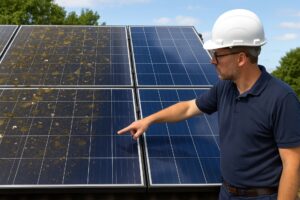
Moss, algae, and lichen are among the most common causes of performance loss in UK solar panel systems. The country’s damp climate, high humidity, and frequent rainfall create ideal conditions for organic growth on photovoltaic (PV) surfaces. Over time, moss spreads across panels, shading the cells, trapping moisture, and significantly reducing energy production.
Left untreated, moss can cause more than just visual damage — it can lead to microcracks, corrosion of frames, and even void manufacturer warranties. Professional solar panel cleaning has therefore become a vital part of ongoing solar maintenance in the UK.
At Solar Clean Robotics UK, the official distributor for QLEEN / RotaQLEEN systems and Chemitek solar chemicals, we specialise in providing advanced cleaning and maintenance equipment designed specifically for the solar industry. In this guide, we explain how to safely and effectively remove moss from solar panels using professional-grade tools and methods.
Moss is a small, non-vascular plant that thrives in damp, shaded environments. Unlike higher plants, moss doesn’t have roots — it absorbs water and nutrients directly through its leaves. This means it can grow almost anywhere that stays moist for long periods, including rooftops, glass, metal, and solar panel surfaces.
In the UK, moss growth is particularly common on north-facing roofs and shaded areas beneath trees. When combined with the country’s frequent rainfall and mild temperatures, these conditions create an ideal breeding ground for moss, algae, and lichen colonies.
Moss spores are microscopic and lightweight, carried easily by wind, rain, and birds. Once they land on a damp, rough, or dusty surface, they begin to germinate. Over time, the growing moss traps more moisture and organic material, allowing the colony to spread.
Solar panels, especially those on older rooftops or near vegetation, are prone to this process because:
Rainwater runoff slows down on smooth glass surfaces, providing lingering moisture.
Tree shade reduces evaporation, keeping the area cool and damp.
Airborne dust and pollen settle on panels, creating a thin nutrient layer.
While moss itself doesn’t feed on the solar glass, it creates a physical and chemical environment that encourages corrosion, shading, and reduced energy production.
Even a light film of moss can disrupt the panel’s ability to absorb sunlight effectively. As moss thickens, it casts shadows and traps dirt, preventing the cells beneath from producing electricity efficiently. In winter, frozen moisture inside moss clusters can even cause microcracks in the glass.
This makes regular inspection and professional cleaning essential — not only for aesthetic reasons but to maintain long-term solar performance and protect your investment.
The UK’s mild, wet conditions are ideal for moss, algae, and lichen growth — particularly on static surfaces like solar modules. Areas with persistent shade or poor airflow (such as between rooftop panels) are most vulnerable.
Flat and low-pitched solar arrays retain more moisture than steep ones, giving spores time to take hold. Dust, bird droppings, and leaf debris act as additional nutrients, accelerating organic contamination.
Even a small patch of moss can cast a shadow that reduces panel efficiency. Large infestations trap water, leading to temperature fluctuations and hotspots that damage cells over time.
Moss also causes:
Energy loss of up to 20–30% in affected panels.
Potential induced degradation (PID) from trapped moisture.
Corrosion of frame edges and junction boxes.
Warranty risk, as most manufacturers require panels to be kept clean.
Regular cleaning not only restores performance but also protects long-term system value.
It may be tempting to climb onto your roof with a brush or pressure washer, but DIY solar cleaning can easily do more harm than good. Using abrasive tools or excessive pressure risks scratching the tempered glass surface or damaging the anti-reflective coating.
Electrical safety is also a major concern. Even when switched off, PV panels can still generate current. A slip, short circuit, or incorrect detergent could void your warranty and create a safety hazard.
Bleach, washing-up liquid, and vinegar are commonly used for household cleaning — but they’re unsuitable for solar panels. These substances can leave residues that attract more dirt and alter the surface tension of the glass, making it harder to rinse clean.
Only approved solar cleaning agents, like Chemitek’s professional solar chemicals, are designed to safely dissolve organic matter without harming PV coatings or the environment.
Before cleaning begins, professionals carry out a site inspection to determine contamination levels, panel accessibility, and surface type. The array should be safely isolated and, if needed, shaded to prevent rapid drying during treatment.
Depending on the severity of moss, technicians may choose between pure water cleaning and chemical pre-treatment using Chemitek’s specialised solar cleaning range.
Pure water cleaning is the foundation of safe solar maintenance. The QLEEN and RotaQLEEN systems, available through Solar Clean Robotics UK, use advanced telescopic poles and rotating brushes that deliver purified water directly to the panel surface.
Here’s why professionals prefer it:
Deionised water leaves no streaks or mineral deposits.
Soft rotating brushes dislodge moss gently without abrasion.
Lightweight carbon-fibre poles allow cleaning up to 20 metres high from ground level.
Controlled water flow reduces waste and improves efficiency.
For moss removal, the RotaQLEEN Classic and RotaQLEEN Vario systems provide constant rotation powered by water pressure or electric drive, ensuring consistent cleaning action across all panel angles.
When moss has already bonded to the surface, Chemitek solar cleaning products are the most effective solution.
Two key products are used:
Chemitek Solar Wash Protect (SWP) – a biodegradable cleaning and protective agent that softens organic growth and forms a hydrophobic film to prevent re-adhesion.
Chemitek Antistatic Solar Armor (ASA) – an advanced anti-static treatment that repels dust, spores, and pollution for long-term protection.
Application method:
Spray SWP evenly across contaminated panels and allow 5–10 minutes dwell time.
Agitate gently using a RotaQLEEN rotating brush.
Rinse thoroughly with pure water until residues are gone.
Once dry, apply ASA for extended protection.
This process ensures the moss is fully neutralised, the surface remains spotless, and future regrowth is minimised.
After cleaning, a final rinse with pure water removes any trace of detergent or loosened debris. Panels are then visually inspected for uniform cleanliness and allowed to air dry naturally.
Professionals ensure the electrical system is safely reconnected and performance verified, often showing immediate gains in energy output.
RotaQLEEN is the benchmark for high-performance solar cleaning across Europe. These German-engineered systems use rotating brushes to clean faster and more evenly than manual pole systems.
RotaQLEEN Classic: Ideal for standard roof-mounted arrays and commercial installations.
RotaQLEEN Vario: Features adjustable rotation speed and angle, suitable for vertical façades and challenging geometry.
Both models connect easily to pure water sources or backpack systems and deliver professional-grade results without damaging PV coatings.
The QLEEN pole system uses lightweight carbon or hybrid fibre to reach up to 20 metres. Combined with HydroPower DI filtration units, these systems provide 100% mineral-free pure water that dries crystal clear on glass.
Modular design allows quick connection between pole sections, brushes, and chemical applicators — perfect for commercial maintenance teams.
Chemitek is a global leader in solar maintenance chemistry, offering products designed to clean, protect, and extend the life of PV modules.
Solar Wash Protect (SWP): Removes organic dirt, moss, and lichen.
Antistatic Solar Armor (ASA): Prevents re-soiling and adds anti-static protection.
NRG Clean and ARC Cleaner: Options for different surface coatings and contaminants.
All Chemitek products are fully biodegradable, eco-friendly, and approved by major solar manufacturers.
Cleaning frequency depends on location and environmental exposure:
| Location Type | Recommended Cleaning Frequency | Typical Conditions |
|---|---|---|
| Coastal Areas | Every 3–4 months | Salt spray and algae growth |
| Rural / Farmland | Twice per year | Pollen, dust, moss spores |
| Urban / Industrial | 3–4 times per year | Pollution, soot, grime |
| Standard Residential | Every 6–12 months | Rain and mild debris |
Regular cleaning ensures maximum efficiency and prevents organic buildup before moss becomes visible.
Tip: Schedule maintenance during spring and autumn — before and after peak solar production seasons.
Solar Clean Robotics UK is the official UK importer and distributor for QLEEN / RotaQLEEN cleaning systems, SolarCleano robotic cleaners, and Chemitek solar chemicals.
By using genuine equipment and certified products, you benefit from:
Proven system compatibility – pure water, brushes, and chemicals work together safely.
Training and aftersales support for commercial operators.
Equipment servicing and parts availability across the UK.
Solutions for all system types – from residential rooftops to large-scale solar farms.
Our clients include solar O&M providers, cleaning contractors, and facility management companies who maintain thousands of panels every month. Using RotaQLEEN systems and Chemitek treatments, they achieve measurable performance gains, extended panel lifespan, and lower operational costs.
Whether you’re cleaning a 4 kW home array or a 10 MW solar park, the same professional principles apply: use the right equipment, follow safe procedures, and protect the surface for long-term performance.
Moss removal is a critical aspect of solar maintenance in the UK. It’s not just about appearance — it’s about protecting your investment, maintaining efficiency, and ensuring compliance with manufacturer warranties.
By combining pure water technology from QLEEN, rotating brush precision from RotaQLEEN, and biodegradable treatments from Chemitek, you can achieve outstanding cleaning results safely and sustainably.
For professional equipment, training, and support, contact Solar Clean Robotics UK — the UK’s trusted distributor for solar cleaning and maintenance systems.
Can moss damage solar panels permanently?
Yes. If left untreated, moss can retain moisture that leads to corrosion or microcracks in the cells, potentially causing permanent damage.
Is it safe to pressure wash solar panels?
No. Pressure washing can damage the glass surface or seals. Always use pure water systems or rotating brush technology designed for solar modules.
How long does Chemitek protection last?
Typically up to six months, depending on environmental conditions. Regular reapplication helps prevent regrowth.
What is pure water cleaning and why is it recommended?
Pure water cleaning uses deionised water with zero minerals or contaminants, leaving no streaks or residue. It’s safe, efficient, and ideal for PV glass.
How can I prevent moss from returning?
Regular cleaning and the use of Chemitek Solar Wash Protect or Antistatic Solar Armor create a barrier against new moss spores and dust accumulation.
Solar Clean Robotics UK – Official UK Distributor for QLEEN, RotaQLEEN, SolarCleano & Chemitek
Your trusted partner for professional solar panel cleaning equipment and solutions.
Specialists in advanced solar panel maintenance, providing robotic, drone, and pure-water cleaning systems, inspections, and insurer-compliant care solutions that maximise efficiency, safety, and system longevity.
Introduction Lichen is one of the most stubborn and damaging contaminants found on solar panels in the UK. Caused by
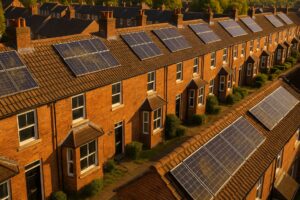
Cleaning roof-mounted solar panels safely requires more than just a hose and brush — it demands proper access, the right
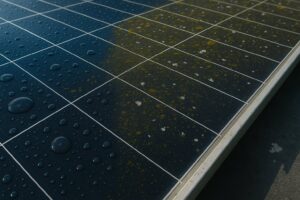
Moss buildup on solar panels reduces energy output and can damage your system. Learn what causes moss to grow and
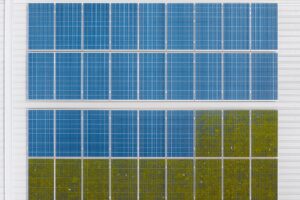
Robots handle large surfaces while RotaQLEEN brushes target detailed or heavily soiled areas. Using pure water cleaning and Chemitek solutions,
Explore our range of professional solar cleaning products — from advanced brushes to pure water systems — designed to maximize efficiency, extend lifespan, and deliver spotless results every time.